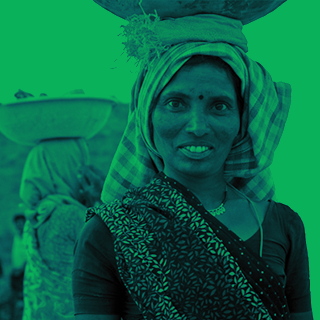
Resilience Through Inclusion: How Maasai Women Are Restoring Kenya's Amboseli Landscape
Through a new GEF funded project, Maasai women are taking on the role of environmental steward to restore degraded land.
Welcome To The
Gender Climate Tracker
Website
About the Gender Climate Tracker
News and Resource Center

Search

Gender Mandates
in Climate Policy

Women's Participation Statistics in Climate Diplomacy
Country Profiles

Data Insights: GCT in Action

| Reference to Women/Gender | |
|---|---|
| Gender Tags | |
| Submitted Language |
English
|
| Submitted Translation |
No
|
| Type of Support |
Conditional
Unconditional
|
| Monitoring and/or Implementation |
Monitoring
Implementation
|
| NDC Commitments |
Mitigation
Adaptation
|
| Participatory Process for NDC Development Mentioned |
Yes
|
| File Url |
Developing country that is highly vulnerable to the impacts of climate change.
Kenya's NDC builds on the participatory multi-stakeholder and cross-sectoral consultative processes during the development of the National Climate Change Response Strategy and the National Climate Change Action Plan at national and country levels.
Mitigation and adaptation actions shall be reviewed every five years. Adaptation actions are further amplified in the National Adaptation Plan.
Under "Planning Process" it states that: In addressing climate change issues, public entities are required to undertake public awareness and consultations, and ensure gender mainstreaming, in line with the Constitution and Climate Change Bill (2014).
| Reference to Women/Gender | |
|---|---|
| Context of Gender Reference |
Adaptation
Mitigation
|
| Gender Tags | |
| Submitted Language |
English
|
| Submitted Translation |
No
|
| Monitoring and/or Implementation |
Implementation
|
| NDC Commitments |
Mitigation
Adaptation
|
| Participatory Process for NDC Development Mentioned |
Yes
|
| File Url |
Developing country in East Africa extremely vulnerable to the impacts of climate change
The process for updating of Kenya’s NDC was led by the Ministry of Environment and Forestry, with coordination carried out by the Climate Change Directorate. It entailed a "detailed and robust assessment of mitigation and adaptation measures, an in-depth analysis, and an extensive stakeholder consultation process". Stakeholders who took part in these consultations were from national and county government sectors, civil society, academia and the private sector. Prior to the COVID 19 pandemic, in-person expert consultative workshops were also hosted to engage stakeholders. These sessions resumed virtually following COVID-related restrictions.
Kenya’s National Climate Change Action Plans (NCCAPs) will be used to implement the priority mitigation and adaptation actions identified in the updated NDC.
In setting out its contributions, Kenya remains cognizant of how gender affects vulnerabilities and contributions to climate change. Given this, Kenya "commits to implement its mitigation and adaptation priorities in a gender-responsive manner." In Kenya’s adaptation program, gender is considered a separate sector, together with the youth and other vulnerable groups. Specific actions for this sector include the development of "safety net structures," enhanced access to "enterprise funds, climate finance and credit lines," promotion of "gender-responsive technologies and innovations," through the private sector and the development of a strategy to transfer these technologies to the relevant groups.
Through a new GEF funded project, Maasai women are taking on the role of environmental steward to restore degraded land.
Women remain excluded from the renewable energy sector and are mostly in non-technical roles.
A new study explores the gender dynamics influencing the adoption of new technologies in groundnut production.
The high-level dialogue in Nairobi calls to include women's land rights in global plans for climate and biodiversity.
Activist Naiyan Kiplagat on these women’s responses to climate change and land grabs across Africa
2025
 Download
2024
2024
Download
2023
2023
Download
Download
2022
2022
Download
2022
Download
2021
2021
Download
Download
2021
2021
Download
2020
Download
2020
Download
2019
Download
2019
Download
2019
Download
2019
2019
2019
Download
2019
Download
2018
Download
2018
Download
2018
Download
2018
Download
2018
Download
2017
Download
2016
Download
2016
Download
2015
Download
2015
Download
2015
Download
2012
Download the GCT App for your mobile device for the offline access to our data.


Share your relevant documents on the country profiles and help us improve the platform.