Liberian Women in Nimba Benefit from Capacity Building Project
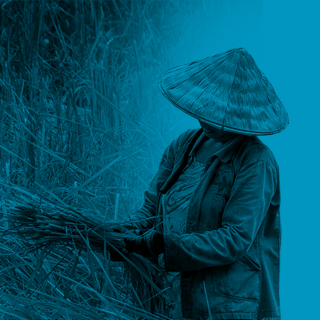
Several Liberian women in Nimba County have benefited from a capacity building project on climate change through the GEF SGP.
Welcome To The
Gender Climate Tracker
Website
About the Gender Climate Tracker
News and Resource Center

Search

Gender Mandates
in Climate Policy
Women's Participation Statistics in Climate Diplomacy
Country Profiles

Data Insights: GCT in Action
| Reference to Women/Gender | |
|---|---|
| Context of Gender Reference |
Adaptation
Mitigation
|
| Gender Tags | |
| Submitted Language |
English
|
| Submitted Translation |
No
|
| Type of Support |
Conditional
Unconditional
|
| Monitoring and/or Implementation |
Monitoring
Implementation
|
| NDC Commitments |
Mitigation
Adaptation
|
| Participatory Process for NDC Development Mentioned |
Yes
|
| File Url |
LDC that is highly vulnerable to the impacts of climate change.
Planning process draws largely on Liberia’s Agenda for Transformation and other national laws, policies, programmes and plans. Liberia has ensured that key relevant stakeholders (government agencies and ministries, civil society, local leaders, private sector, women groups, youth and student representatives, NGO) were included and fully participated in its NDC preparation process.
The monitoring reporting and verification system for the NDC will build upon existing structure for monitoring and evaluation and intersectoral coordination. The country will require further support to ensure that its MRV system is strengthened in order to track progress.
Women’s groups included and fully participated in the NDC preparation process. In impacts and vulnerability evaluation, it notes: For the most part, women and children are particularly vulnerable to the impacts of climate change. However their unique knowledge and perspectives also provide opportunities for inclusive, equitable and efficient adaptation responses and coping strategies. A Climate Change Gender Action Plan was developed in 2012. It provides a framework for enhancing gender equality in both climate adaptation and mitigation activities including decision-making processes, capacity building, implementation of policies and measures to ensure that climate change vulnerabilities are addressed with gender equity. In relation to adaptation, the long-term adaptation initiatives will include fishery, health and transport, all with an integrated gender-responsive approach to ensure progress towards efficient and effective adaptive capacity and resilience. Planned adaptation actions in the health sector including integrating climate change considerations into existing health policies and strategies, taking into account gender-differentiated impacts and responses.
| Reference to Women/Gender | |
|---|---|
| Context of Gender Reference |
Adaptation
Mitigation
|
| Gender Tags | |
| Submitted Language |
English
|
| Submitted Translation |
No
|
| Monitoring and/or Implementation |
Monitoring
Implementation
|
| NDC Commitments |
Mitigation
Adaptation
|
| Participatory Process for NDC Development Mentioned |
Yes
|
| File Url |
Country that faces current and future threats of climate change
To update the NDC, a desk review was conducted to generate a Joint Analysis Report, “which was used specifically to engage sectorial stakeholders and other national stakeholders” on different matters. Technical/expert group meetings, youth and gender dialogues, private sector meetings, and regional engagements were held.
Liberia has a national Monitoring, Reporting and Verification (MRV) system in place, which incorporates “relevant key actors and institutions involved with climate MRV, including GHG emission inventories, GHG mitigation actions, climate finance, and climate impacts to enable tracking of climate change actions and reports.” Moreover, the updated NDC states that Liberia has begun developing an NDC Implementation plan that will discuss short and long-term actions to achieve the country’s mitigation and adaptation goals.
Gender is mentioned throughout Liberia’s Updated NDC. The Gender Dialogues conducted as part of the update process were intended to “incorporate gender inclusiveness in Liberia’s NDC[.]” The main objectives of these dialogues were championing the advancement of women’s economic empowerment and participation, to “ensure that women remain an integral part of Liberia’s NDC revision process, and ensure inclusiveness in environmental planning and decision-making through capacity building for women owned enterprises to enable their integration…into the mainstream economic activity, environmental and climate change discussion and decision-making.” The update also mentions Liberia's Ministry of Gender and Energy, which participated in the regional validation workshops that presented the draft revised NDC as developed by stakeholders. Gender is mentioned twice in the country’s mitigation actions and policy measures. First, under actions to strengthen institutional and individual capacity for urban planning and management at several entities, where gender considerations are included “as part of training for institutional and local experts.” Secondly, mitigation actions also seek to “mainstream climate actions… and gender youth concerns into every sector activity by 2025.” Likewise, gender is also included in Liberia’s adaptation actions and policy measures. The country targets the development of a national plan for ecosystem-based adaptation by 2030, and this would ensure integration of local and indigenous knowledge, gender and youth considerations among other factors within adaptation plans. Moreover, adaptation actions include a Women in Agriculture program to “support implementation of climate-resilient agricultural and livestock practices and increase women’s access to agricultural inputs and labor-saving devices by 2025.” The last goal mentioned in this section is the integration of gender-sensitive considerations in current climate change policies by 2025. Finally, the updated NDC specifies that Liberia’s NDC Implementation Plan is intended to accomplish several things, including gender equality and social inclusion.
Several Liberian women in Nimba County have benefited from a capacity building project on climate change through the GEF SGP.
To boost Liberia’s fight against climate change, the EPA & Conservation International are including gender in the process.
Uncovering the impacts of bioenergy on women and forests in West Africa.
"We must ensure that climate change adaptation planning in Liberia addresses the gender imbalance between men and women".
 Download
2022
Download
Download
2019
Download
2012
Download the GCT App for your mobile device for the offline access to our data.


Share your relevant documents on the country profiles and help us improve the platform.