From Scrap Collector to Climate Warrior: How a Vietnamese App is Empowering Women
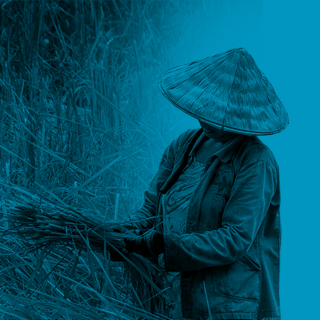
A new app measures the CO2 reduced by informal women waste collectors and households.
Welcome To The
Gender Climate Tracker
Website
About the Gender Climate Tracker
News and Resource Center

Search

Gender Mandates
in Climate Policy
Women's Participation Statistics in Climate Diplomacy
Country Profiles

Data Insights: GCT in Action

| Reference to Women/Gender | |
|---|---|
| Context of Gender Reference |
Adaptation
|
| Gender Tags | |
| Submitted Language |
English
|
| Submitted Translation |
No
|
| Type of Support |
Conditional
Unconditional
|
| Monitoring and/or Implementation |
Monitoring
Implementation
|
| NDC Commitments |
Mitigation
Adaptation
|
| Participatory Process for NDC Development Mentioned |
Yes
|
| File Url |
Developing country that is highly vulnerable to the impacts of climate change.
Vietnam's NDC has been developed with the participation and contributions from different line ministries, non-governmental organisations, research institutions, business sector representatives as well as international development partners.
The monitoring and evaluation of the implementation of the GHG mitigation component to achieve the mitigation goals formulated in the INDC will be reflected in Viet Nam's National Communications and Biennial Updated Reports submitted to the UNFCCC. Climate change adaptation activities until 2030 will be evaluated based on the following key indicators: At least 90% of Socio-Economic Development Plans have integrated disaster risk management and climate change adaptation; The average national poverty rate is lowered 2%/year; in poor districts and communes it is lowered by 4%/year; 100% of piers and boat storm shelters are constructed, and 100% of offshore fishing boats and ships have sufficient communication equipment; Forest coverage increases to 45%; the area of protection forest in coastal areas is increased to 380,000 hectares, including 20,000 to 50,000ha of additional mangrove planting; At least 90% of city-dwellers and 80% of rural inhabitants have access to clean water; 100% of the population has access to health care services. The monitoring and evaluation of the implementation of the adaptation component will be reflected in Viet Nam's National Communications and Biennial Updated Reports submitted to the UNFCCC.
Under "Need to include an adaptation component in Viet Nam's NDC," "The NDC is an official and important channel for conveying information and experience in adaptation, including sharing risks and damages, to the international community. The National Climate Change Strategy has identified that priorities are food security, energy security, water security, poverty reduction, gender equality, social security, public health, livelihood improvements and the protection of natural resources." Under "Climate Change Adaptation until 2020," it states "Climate change adaptation must be linked to sustainable development and the transition towards a low-carbon economy, and to ensure a systematic, joint, interdisciplinary, interregional approach, and incorporate gender equality, hunger eradication and poverty reduction.
| Reference to Women/Gender | |
|---|---|
| Context of Gender Reference |
Adaptation
|
| Gender Tags | |
| Submitted Language |
English
|
| Submitted Translation |
No
|
| Monitoring and/or Implementation |
Monitoring
Implementation
|
| NDC Commitments |
Mitigation
Adaptation
|
| Participatory Process for NDC Development Mentioned |
Yes
|
| File Url |
Developing country that is considered highly vulnerable to the impacts of climate change
An inter-sectoral working group, headed by the Ministry of Natural Resources and Environment, was responsible for the updates in the NDC. This update drew from national consultation workshops, and other workshops to review their tasks and identify implementation methods. Participants of these workshops included scientists, Ministries, sectors, localities, NGOs, research agencies, enterprises, and international development partners.
An entire section is dedicated to measures to promote the Updated NDC’s implementation, but there is no law or national strategy that the document points to. The updated NDC mentions what needs to take place in general to achieve successful implementation. Developing and improving policies and institutions related to climate change mitigation and adaptation to develop these mechanisms is mentioned. Communication, education, and awareness raising of climate change mitigation and adaptation is also listed as a measure. Finally, efficient development and application of human, technological and financial resources is listed. In regard to monitoring and evaluation of the implementation of the NDC, this is said to be carried out at the local, sectoral, and national level. Additionally, socio-political and other organizations are encouraged to participate in the independent monitoring and evaluation of implementing the updated NDC. The monitoring and evaluation of implementing mitigation activities of this updated NDC shall be reflected in Viet Nam’s National Communication, Biennial Update Reports and Biennial Transparency reports, all of which are submitted to the UNFCCC secretariat.
Viet Nam addresses gender in the following ways: Adaptation: Climate change, increased natural disasters and climate extremes produce different impacts on women and men. While men are exposed to more risks due to their involvement in search and rescue operations, women are generally more vulnerable to health and socio-economic problems; Climate-induced risks: The poor, ethnic minority groups, people whose livelihoods depend on the climate, the elderly, women, children, and people with chronic illnesses have the highest level of vulnerability. Women, especially ethnic minority women, are highly vulnerable due to limited access to education and fewer opportunities to participate in non-farm employment; Public health: Increased temperatures, hot and prolonged heat waves, air pollution, as well as other climate extremes negatively affect human health, leading to increased vulnerability especially among the elderly, women, children and people with existing conditions; Loss and damage: Since the end of 2014, increased temperatures due to the impact of El Niño have caused drought and saline intrusion, seriously damaging production activities and people's lives, including those of women.
A new app measures the CO2 reduced by informal women waste collectors and households.
Experts highlight traditional gender roles and limited education as hindrances to break free from a cycle of vulnerability.
Greater gender equity benefits reforestation efforts.
New research shows efforts to complete policies on gender equality & climate change, but noted lack of women's participation
A green, inclusive and transformative recovery can be supported by integrating gender considerations into NDCs.
 Download
2022
Download
2022
2021
Download
2020
Download
2020
2019
Download
2018
Download
2018
2017
Download
2017
2016
Download
2015
2015
Download
Download
2015
Download the GCT App for your mobile device for the offline access to our data.


Share your relevant documents on the country profiles and help us improve the platform.