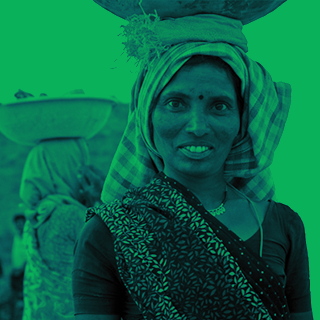
Climate Fallout Tests Coastal Women in Historic Javanese Sultanate
Communities along the coast of Demak district grapple with rising sea levels due to groundwater extraction and development
Welcome To The
Gender Climate Tracker
Website
About the Gender Climate Tracker

News and Resource Center

Search

Gender Mandates
in Climate Policy

Women's Participation Statistics in Climate Diplomacy

Country Profiles

Data Insights: GCT in Action

| Reference to Women/Gender | |
|---|---|
| Gender Tags | |
| Submitted Language |
English
|
| Submitted Translation |
No
|
| Type of Support |
Conditional
Unconditional
|
| Monitoring and/or Implementation |
Monitoring
Implementation
|
| NDC Commitments |
Mitigation
Adaptation
|
| Participatory Process for NDC Development Mentioned |
Yes
|
| File Url |
Developing country highly vulnerable to effects of climate change.
GOI conducted consultations with various stakeholders representing academia, the private sector and CSOs. These consultations included workshops and consultations organised at both the national and local levels.
The NDC will be reviewed and adjusted as necessary up to the time of Indonesia’s ratification to the legal instrument agreed to in COP 21.
Preparation of the NDC has taken into account Sustainable Development Goals, including achieving gender equality. NDC includes over-arching "Perspectives on Vulnerable Groups, including Gender and Adat Communities": these policies and actions include an emphasis on encouraging participation of the most vulnerable groups, including adat communities, the poor, and women, in order for the measures to be effectively implemented, and provide equitable benefits for all citizens.
| Reference to Women/Gender | |
|---|---|
| Context of Gender Reference |
Adaptation
Mitigation
|
| Gender Tags | |
| Submitted Language |
English
|
| Submitted Translation |
No
|
| Monitoring and/or Implementation |
Monitoring
Implementation
|
| NDC Commitments |
Mitigation
|
| Participatory Process for NDC Development Mentioned |
Yes
|
| File Url |
Developing country highly vulnerable to the effects of climate change and already experiencing serious climate impacts.
This update drew from stakeholder consultations with academia, scientists, Ministries and other government institutions, the private sector, and civil society organizations. Such consultations “included workshops and consultations organized at both the national and provincial levels, as well as bilateral meetings with key sectors.”
Indonesia created a strategy for NDC Implementation, which includes nine programs: 1) "Building ownership and commitment among Ministries and other governmental Institutions, sub-national governments, private sector, civil society, and financial institutions (Party and Non-Party Stakeholders); 2) Capacity building to enhance capacity of institutions and human resources at all levels, covering all aspects of climate change, particularly on mitigation and adaptation actions, implementation of transparency framework, and climate finance; 3) Creating enabling environment to engage wider stakeholders in mitigation and adaptation as well as in resource mobilization, through appropriate regulatory framework, policy and measures; 4) Developing framework and network for coordination and building synergy among sectors, regions and actors/stakeholders; 5) One GHGs-data policy to support the implementation of transparency framework at the national level; 6) Developing policies, planning and intervention programmes for NDC implementation, including integrating mitigation into five category sectors (forestry, energy, IPPU, waste, agriculture) and adaptation (sectoral and regional) into development planning, to secure financial support (public fund) and facilitate resource mobilization (domestic sources and international support); 7) Developing guidance for NDC implementation to facilitate Ministries and other governmental institutions, sub-national governments and other non-party stakeholders in implementing Programme No. 6. 8) NDC implementation refers to implementation of policies, planning and intervention programmes (Programme No. 6), taking into account guidance developed under Programme No. 7. 9) Monitoring and review of NDC to track progress of NDC implementation, review of NDC and adjust the NDC whenever necessary. An Inter-ministerial team has been established to monitor progress and achievement of NDC implementation.”
Gender is mentioned throughout Indonesia’s Updated NDC. Firstly, developing the NDC took into account the Sustainable Development Goals, which includes achieving gender equality. Additionally, the document highlights Indonesia's respect for the right to development, “including gender equality, empowerment of women and intergenerational equalities.” The update mentions that the country has policies related to gender equality and gender balance, noting the importance of mapping gender issues in climate change in all development sectors when implementing policy. “Enhancing role of women in development and strengthening women’s capacity and leadership in climate change have been initiated and will be continued as part of the NDC implementation and development of LTS.”
Communities along the coast of Demak district grapple with rising sea levels due to groundwater extraction and development
Community-based initiatives can play a vital role in building resilience among women farmers.
Women in the Global South countries possess the abilities and strength to protect the environment.
The Ministry of Women's Empowerment and Child Protection seeks to make policies related to climate change gender-responsive
A recent webinar explored how women face greater difficulties in accessing climate finance and their role in climate action
 Download
2024
2024
2023
Download
2022
Download
2022
Download
2022
2021
Download
2021
2021
2021
Download
Download
2019
Download
2019
Download
2018
2018
2017
Download
2017
2016
Download
2013
Download
2013
Download the GCT App for your mobile device for the offline access to our data.


Share your relevant documents on the country profiles and help us improve the platform.