Firman en Costa Rica decreto sobre igualdad de género y clima
Costa Rica firmó un decreto para brindar herramientas a las mujeres frente a los desafíos que presenta el cambio climático
Welcome To The
Gender Climate Tracker
Website
About the Gender Climate Tracker
News and Resource Center

Search

Gender Mandates
in Climate Policy
Women's Participation Statistics in Climate Diplomacy
Country Profiles
Data Insights: GCT in Action
| Reference to Women/Gender | |
|---|---|
| Context of Gender Reference |
Adaptation
Mitigation
|
| Gender Tags | |
| Submitted Language |
Spanish
|
| Submitted Translation |
Yes
|
| Type of Support |
Conditional
Unconditional
|
| Monitoring and/or Implementation |
Monitoring
Implementation
|
| NDC Commitments |
Mitigation
Adaptation
|
| Participatory Process for NDC Development Mentioned |
Yes
|
| File Url |
Developing country highly vulnerable to the adverse impacts of climate change.
As part of its Open Government policy, during 2015, a number of sector-wide dialogues were organised by Costa Rica's government, bringing together key stakeholders to discuss the country's greenhouse gas reduction goals, within the INDCs context. These dialogues have enabled a clear definitions of the sectoral plans and programmes needed to accomplish the country's climate action goals.
Costa Rica has adopted an Open Government policy. It's looking into strengthening accountability mechanisms, information access and availability, and citizen participation. There will also be two open participation councils, one technical-scientific and one multi-stakeholder platform which will accompany the government’s climate planning and management. Through the Scientific Council, the Citizen Consultation Council and other ad hoc entities, Costa Rica will review the metrics and goal agreed upon for emissions reductions and define the dates for the sector's carbon neutrality, under a focus of continuous improvement. The government will confirm its role as a facilitator of enabling conditions which will allow the different sectors, communities and society in general define their mitigation and adaptation goals, based on their own economic, social and cultural, gender sensitive options for the wellbeing of a low emission economy.
References to women/gender in relation to all climate policies and actions, including monitoring and review framework. Both climate policies and the actions that derive from them will base themselves in the country's historical commitment to universal human rights and gender equality principles. CR favours a transformational approach to gender in public climate change policy, and supports the participation of women (AC) in policy making and climate actions implementation. This will require a full compliance with Cancun's safeguards on REDD, as well as securing indigenous peoples' FPIC. Also, it's expected to increase citizen forums through the pre-2020 period to define the best climate governance arrangements to deliver on the commitments acquired in this National Contribution. In relation to Means of Implementation: The government will confirm its role as a facilitator of enabling conditions which will allow the different sectors, communities and society in general define their mitigation and adaptation goals, based on their own economic, social and cultural, gender sensitive options for the wellbeing of a low emission economy.
| Reference to Women/Gender | |
|---|---|
| Gender Tags | |
| Submitted Language |
Spanish
|
| Submitted Translation |
No
|
| Monitoring and/or Implementation |
Implementation
|
| NDC Commitments |
Mitigation
Adaptation
|
| Participatory Process for NDC Development Mentioned |
Yes
|
| File Url |
Developing country with rich biodiversity that will be significantly affected by climate change
The planning process for the update included combining quantitative elements of climate action models and qualitative elements developed through a planning process based on future exploratory scenarios. These were based on models provided by the University of Costa Rica, under the leadership of the Directorate of Climate Change (DCC), as well as input from various experts and national and international organizations. For the communication on adaptation, an analysis of Costa Rica’s public policies was developed, and consultations with sectoral experts generated the inputs for the sessions involving future scenarios. To strengthen public participation in the process, the DCC organized a series of talks in November and December 2020, which were attended by communities and groups that are vulnerable to climate change impacts but are not always represented in decision-making spaces.
Costa Rica has developed its Disaster Risk Plan (2021-2025), National Policy Action Plan on Adaptation (2018-2030), and adaptation action plans for its six socioeconomic regions.
Gender is mentioned throughout the updated NDC. The document recognizes that there are groups in the country whose rights are at risk, and who are likely to be especially vulnerable to the effects of climate change. Transgender people, women, indigenous peoples, African communities, and persons with disabilities are included under this category. These groups are considered throughout the NDC, and efforts were made to enable their participation in NDC process. Costa Rica’s updated NDC was developed in line with the SDGs, including SDG 5 on gender equality and empowerment for all women and girls. As part of its contributions to meeting this goal, Costa Rica is set to follow up on indicators required to ensure gender equality and the empowerment of organized groups of women, the transsexual community and other vulnerable groups, with a view to having these indicators in place by 2030. Rica’s contribution to this effort are specific, citing that by 2030 the country will follow up on indicators required to ensure gender equality and the empowerment of organized groups of women, the transexual community and other vulnerable groups mentioned. Moreover, in 2022, Costa Rica will implement its Gender Equality and Climate Action Plan, under the National Policy for Effective Equality between Women and Men framework. The country also plans to conduct a study on climate change risks and impacts on vulnerable groups, differentiating the data gathered by sex.
Costa Rica firmó un decreto para brindar herramientas a las mujeres frente a los desafíos que presenta el cambio climático
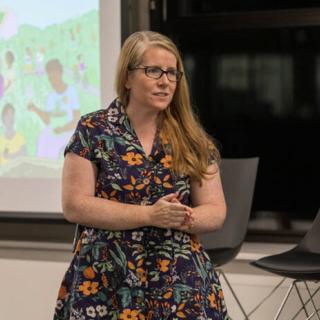
Este miércoles se realizó en la Asamblea Legislativa el conversatorio "Mujeres Frente al Cambio Climático".
"Women and other disadvantaged groups are more susceptible to climate shocks due to the lack of diversification of their assets"
This Earth Day, we are highlighting stories of refugee women across the world.
"The pandemic has hit hard, but these women are seeing a way to use this experience to create more resilience in the long-term."
 Download
2024
2023
Download
2022
Download
2021
Download
Download
2019
Download
2019
Download
2019
Download
2019
Download
2018
Download
2016
Download
2016
Download
2015
Download the GCT App for your mobile device for the offline access to our data.


Share your relevant documents on the country profiles and help us improve the platform.