Changement climatique / Les femmes s’engagent dans la lutte
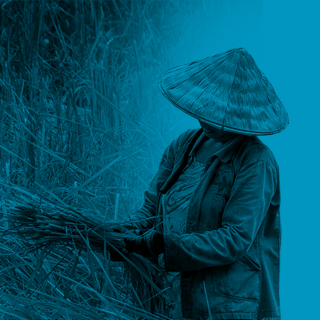
Les sessions aident les femmes à mieux s’organiser et à lutter contre les changements climatiques en Afrique de l'Ouest.
Welcome To The
Gender Climate Tracker
Website
About the Gender Climate Tracker
News and Resource Center

Search

Gender Mandates
in Climate Policy
Women's Participation Statistics in Climate Diplomacy
Country Profiles

Data Insights: GCT in Action

| Reference to Women/Gender | |
|---|---|
| Gender Tags | |
| Submitted Language |
French
|
| Submitted Translation |
Yes
|
| Type of Support |
Conditional
Unconditional
|
| Monitoring and/or Implementation |
Monitoring
|
| NDC Commitments |
Mitigation
Adaptation
|
| Participatory Process for NDC Development Mentioned |
Yes
|
| File Url |
A LDN, Guinea suffers from severe structural vulnerabilities. Both the abundant forests and rivers in the country are under severe threat from the impact of climate change and regional population flows are likely to increase the pressure.
The National Environment Department of the Ministry of Environment, Water and Forestry (MEEF) is responsible for coordinating the implementation of government policy on combating climate change and also deals with GHG inventories. The National Consultation Platform on COP21 was set up on the initiative of the MEEF to mobilize representatives of the State, technical departments, civil society and the private sector so that Guinea's voice could be heard, taking on board contributions from all relevant institutions and every level of society. Guinea has ratified the other two Rio conventions and put together national strategies to combat desertification and soil degradation, as well as conserve biodiversity. Implementation of these two strategies will also facilitate adaptation to climate change. The National Adaptation Plan of Action (NAPA) in 2007, having identified the following vulnerable sectors: crop and livestock farming; water; and the coastal and forest zone.
Monitoring mechanism in place which includes a revision following COP21, if necessary; then, a revision following delivery of the 2nd National Communication; followed by review every five years by the steering committee on monitoring/evaluation.
Women mentioned in the NAPA as a vulnerable group (WVG), stating the most vulnerable groups to climate change in different regions of the country include poor communities in rural areas such as farmers and small producers (men and women) and people whose livelihood mainly depends on the use of natural resources (hunters, fishermen, salt producers, etc).
| Reference to Women/Gender | |
|---|---|
| Context of Gender Reference |
Adaptation
Mitigation
|
| Gender Tags | |
| Submitted Language |
French
|
| Submitted Translation |
No
|
| Monitoring and/or Implementation |
Monitoring
Implementation
|
| NDC Commitments |
Mitigation
Adaptation
|
| Participatory Process for NDC Development Mentioned |
Yes
|
| File Url |
Developing country with high vulnerability to climate change
This process for updating the NDC included workshops with participants from Ministries, Civil Society and Technical and Financial Partners, held from November 2019. It was done under the leadership of the National Directorate of Pollution, Nuisances and Climate Change within the Ministry of Environment, Water and Forests, with support from the UNDP.
Sectoral measures shall be implemented through Guinea’s National Economic and Social Development Plan (PNDES 2021-2025), which is currently being developed. A monitoring and evaluation mechanism is built into the PNDES. Implementation shall be directed by the Ministry of Planning, as well as the Ministry of the Environment, Water and Forests, and shall be based on guidelines from the National Committee on Climate Change.
Gender is mentioned throughout Guinea’s NDC, and a separate section is dedicated to gender integration. Gender mainstreaming is considered a priority for mitigation and adaptation measures, as well as within the PNDES. In particular, the Updated NDC states that mitigation and adaptation measures are to improve the adaptive capacity and resilience of women and vulnerable groups in the country. Concerns of these groups are met by the following actions: 1) Provision of sufficient operating resources to the Gender and Equity departments created in all ministries in 2015; 2) Integration of adaptation and mitigation measures into resources dedicated to the Nation Fund to Support Women’s Economic Activities and the National Fund for Gender Promotion; 3) Effective application of the law on parity (adopted May 2, 2019), in which women must constitute 50 percent of electoral lists; and 4) Establishment of adequate technical training in relation to climate change for youth, women, and people with reduced mobility. Gender-specific monitoring is also included in the NDC's mitigation and adaptation measures, with the intention to support gender mainstreaming in public policy planning and to draw the necessary conclusions of potential differential effects.
Les sessions aident les femmes à mieux s’organiser et à lutter contre les changements climatiques en Afrique de l'Ouest.
Uncovering the impacts of bioenergy on women and forests in West Africa.
 Download
2024
Download
2019
Download
2019
Download
2019
Download
2019
Download the GCT App for your mobile device for the offline access to our data.


Share your relevant documents on the country profiles and help us improve the platform.