Women, Rivers and Water: A Closely Connected Theme
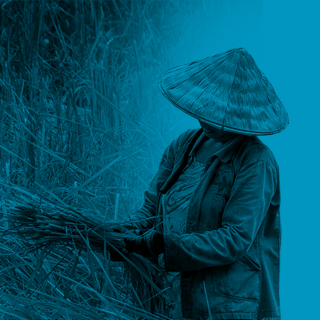
Considering the inclusion and leadership of women and their game-changing role in water stewardship and river protection.
Welcome To The
Gender Climate Tracker
Website
About the Gender Climate Tracker
News and Resource Center

Search

Gender Mandates
in Climate Policy
Women's Participation Statistics in Climate Diplomacy
Country Profiles

Data Insights: GCT in Action

| Reference to Women/Gender | |
|---|---|
| Submitted Language |
English
|
| Submitted Translation |
No
|
| Type of Support |
Conditional
Unconditional
|
| Monitoring and/or Implementation |
Monitoring
Implementation
|
| NDC Commitments |
Mitigation
Adaptation
|
| Participatory Process for NDC Development Mentioned |
Yes
|
| File Url |
LDC that is highly vulnerable to the impacts of climate change.
NDC has been prepared through an inclusive stakeholder consultation process including line ministries, research institutions, civil organisations, provincial governments, private sector and international development partners.
The cross-ministerial National Disaster Management Committee (NDMC) will oversee the overall implementation of the INDC. Using the NDMC’s existing structure, the Ministry of Natural Resources and Environment will act as secretariat. This will involve coordination with relevant ministries and cooperation with international stakeholders to access finance and capacity building. MNRE will disseminate the DNC to relevant ministries in the central and line agencies in the local levels. The NDC will also be incorporated into the 8th National Socio-Economic Development Plan to ensure the continued mainstreaming of climate related policy in overall national plans. Overall strategy, coordination of NDC implementation and the regulatory framework will be established by the MNRE.
| Reference to Women/Gender | |
|---|---|
| Context of Gender Reference |
Adaptation
|
| Gender Tags | |
| Submitted Language |
English
|
| Submitted Translation |
No
|
| Monitoring and/or Implementation |
Implementation
|
| NDC Commitments |
Mitigation
Adaptation
|
| Participatory Process for NDC Development Mentioned |
Yes
|
| File Url |
Small developing country highly vulnerable to the effects of climate change
Four consultation rounds were conducted with stakeholders, which included government agencies, development partners, and public and private actors. First, in 2019, there was a progress assessment for each target within the 2015 NDC, as well as updates on the country’s current situation and discussions of near-term future planning. The second and third rounds held from April-August 2020 and involved “comprehensive feedback and comments from all relevant stakeholders on the draft NDC.” A validation workshop was also held for the update's finalization.
The country’s national Coordination Mechanism shall oversee the NDC’s implementation. Reporting, monitoring and review are also provided for within Lao PDR’s National Adaptation Plan. A Strategy on Climate Change and Health Adaptation has also been developed, for implementation from 2018 to 2025.
Gender is mentioned in the Health Adaptation Strategy. In this strategy’s second component, which relates to organization and staff capacities strengthening, “implementation plans on gender roles related to climate change and health” are specified as a key indicator. Additionally, Lao PDR’s Scaling-up Water Supply, Sanitation and Hygiene project has gender-specific targets, as women's access to improved water and sanitation services are explicitly considered separately. Lao PDR’s 2010 National Strategy of Climate Change (currently under revision) will “put a stronger emphasis on gender responsive climate action and enhanced adaptation efforts of the vulnerable sectors.” Furthermore, Lao PDR is also working to implement the Mekong Climate Change Adaptation Strategy and Action Plan and the Basin Development Strategy 2021-2030, which provides for gender-sensitive livelihood development in transboundary areas. Women’s health is mentioned as key indicator of the country’s Health Adaptation Strategy, and it is noted that during an Organizational and Capacity strengthening workshop, 50% of attendees were women.
Considering the inclusion and leadership of women and their game-changing role in water stewardship and river protection.
A powerful pair working together in Lao PDR, minimising food insecurity by reducing gender inequality.
2022
2021
2017
Download the GCT App for your mobile device for the offline access to our data.


Share your relevant documents on the country profiles and help us improve the platform.